
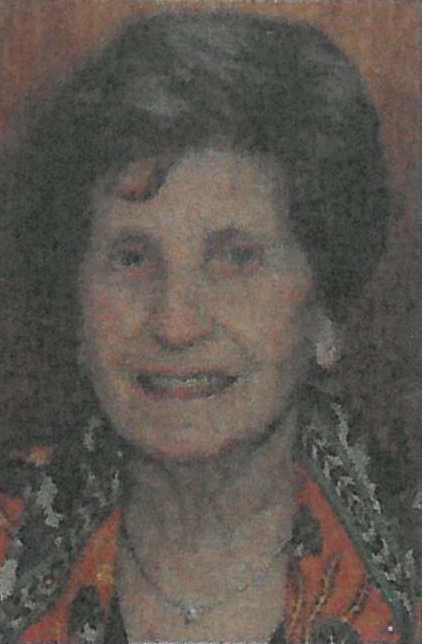
No summary at this time, please refer to the detailed index below.
VIDEO
RECORDING SUMMARY OF CONTENTS
0-5:00
Mayie doesn’t have any regrets for having come to the United States. She went from Belgium to New York. She stayed in New York for 5 days with Valentine Aguirre who was a famous Basque and owned a hotel and travel agency. He put them on a train and they traveled on it for 3 days and 4 nights when they made it to Bakersfield, where Mayie met her aunt and cousin who picked them up. Mayie never desired to return and live in the Basque Country. Her father always told her that America was the “key to the world.” The size of the United States was unbelievable.
When hearing the name “Basque,” Mayie says Basque “means everything.” She feels that Basques help each other and are close. It was very important to Mayie to become a citizen and be familiar with the laws. She would go to night school to learn English when she wasn’t working. To her, to be a Basque American is to share her culture and mix it with the American culture.
5-10:00
To mix the cultures, the food, the Basque clubs, continuing traditions, teaching the kids, and introducing the social aspects to Americans.
Mayie feels that the Basque culture and presence in the United States is very strong and getting stronger with people who are interested in the culture. She feels the language doesn’t have much to do with the continuance of the culture because feelings could be shared even without the language.
She feels that Basque’s have learned a lot from Americans, even if they didn’t speak English, she feels Americans are the best to help you.
Some of the main differences seen in Basque culture from the Basque Country and the Basque culture in the United States are: different mentalities …more open to things in the U.S. whereas the Basque Country is very traditional.
The Basque culture in Bakersfield is better than other Basque communities in the U.S.
Mayie’s favorite Basque dish is breakfast food. Ham, sausage, eggs, and fried potatoes.
Basque cuisine in the United States is served family style and feels like back home, which started with the boardinghouses.
10-15:00
The boarding houses would house 14-15 people at one time. The sheep men would come to pick up the herders as their employees there. Grace Elizalde was the owner of the boarding house who did so much for the people who were boarding there. People would arrive and she would feed them and never asked for any money…just said, “Later, when you make money…you’re going to pay me back.”
The development of Basque culture in most western Basque cities was centered around Basque hotels. The men would arrive and be taken to get supplies and then the sheep company would come and pick them up. They might have been here for only a day before being taken out to the sheep. The hotels would be near railroad stations because Basques would come in by train.
Having the Wool Growers Restaurant has affected Basque food in the United States because at the boarding house, the meals were served family style at a specific time, leaving those who were late without. Mayie had the thought to be able to serve throughout the day at her own restaurant. She and her husband started their restaurant in 1954. Basque restaurants followed after Mayie’s example.
The Basque language in America isn’t as important because on the inside you’re Basque, so the language doesn’t make a difference.
15-20:00
Mayie doesn’t know if the Basque language is dying out. She doesn’t feel that it’s too important to keep. She feels that the Basque festivals are an important part of keeping the culture alive. People enjoy being together and becoming friends. Basques from other communities travel to other festivals around the West. She used to go to Boise festivals, San Francisco, Reno, Bakersfield, and Chino. The festivals in the United States are different than those in the Basque Country because they are more united, the generations have changed a lot over there. They are more Basque in the United States festivals than they are in the Basque Country. Basque dancing and singing is still very important because it is the culture.
The North American Basque Organizations has done a lot for the Basque community because there are many new Basque clubs that are helping to keep the culture going.
20-25:00
American ideas and perception of the Basque culture is that they love it. They say they wish they were Basque!
The Basque work ethic cannot be taken away from them. When coming into the states, they could only bring $50 with them. They never complained, they worked without looking at the clock, and didn’t make much money. They were fed in the morning, lunch, and dinner. They just had to buy toast and jelly. They knew how to save their money. Mayie thinks Americans have a lot to learn from the Basque by being more “frugal.” The first generation Basques who came over wanted the best for their children and taught them to be smart with their money. Mayie wanted her children to be the best that they could and work hard, like she did. She had her son 2 weeks before opening her restaurant and continued to work after that.
25-30:00
She had to call immigration every year, and had to fill out a change of address form if they had moved until they were citizens. Before becoming a citizen, she was told she had to be in the United States for 3 years before getting the first round of papers, then wait 3 more years to get citizenship papers. She got her citizenship papers after six years (arriving in 1947-1953). It was important for Mayie to have her paperwork and with her business, it was crucial in order to get licensing. Mayie’s husband had been in the United States since 1928 and didn’t have citizenship papers, so she taught him the constitution and he passed his test with her.
Mayie came to the United States speaking French and Basque, with a little bit of Spanish. She had four brothers and a sister who also came to the United States. Her siblings went through Ellis Island and went to California.
Her restaurant name came about after her husband suggested it for being in a location with all of the sheep men in the area.
NAMES:
Aguirre, Valentin: the owner of a hotel in New York
Amestoy, Marie and Frank: owners of the Amestoy Hotel in Bakersfield, CA
Angèle: Mayie’s sister
Chevallier, Marie: Mayie’s aunt
Dr. Schumann: Austrian doctor who lived in the half of Mayie’s family house in Baigorri during the German occupation
Elizalde, Grace: former owner of the Noriega Hotel in Bakersfield, CA
Maitia, Jean Baptiste “JB”: Mayie’s husband
Mr. Anderson: English captain that married a woman from Baigorri
PLACES:
Baigorri, Nafarroa Beherea (France)
Bakersfield, California
Belgium
Boise, Idaho
Chino, California
New York
Price, Utah
Reno, Nevada
San Francisco, California
The Amestoy Hotel (Bakersfield, California)
The Noriega Hotel (Bakersfield, California)
The Pyrenees Café (Bakersfield, California)
Washington D.C.
Wool Growers: Mayie’s restaurant in Bakersfield, California
THEMES:
Boarding Houses
Business
Clubs and Organizations
Community Events
Education
Family
Farming
Festivals
Food
Immigration
Language
Life in the Basque Country
Nationalism
Other Basque friends and acquaintances
Sheepherders
Spanish Civil War
Travel
US Citizenship
World War II
Work