
No summary at this time, please refer to the detailed index below.
0-5:00
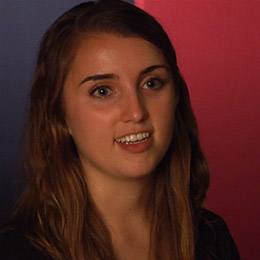
Miren Aizpitarte is 18 years old, she has just finished high school and she will go to Cal Poly (California Polytechnic State University) in San Luis Obispo (CA) to study biomedical engineering. She was really into sports medicine during high school and was able to follow the sports medicine trainer for the Idaho Stampede [semi-pro basketball], an experience that she really enjoyed.
Both of Miren’s parents are Basque. Miren’s grandparents emigrated from the Basque Country. She has grown up in Boise and has always been really involved in the Basque culture. Her mother’s parents, Juanita Bengoechea and Urbano Totoricaguena came from Gernika, Bizkaia. Her father’s father was full Basque and his name was Domingo Aizpitarte.
Her grandparents immigrated to the US because of World War II and the bombing of Gernika, like a lot of Basques at that time.
Miren’s grandmother Juanita Bengoechea went to Argentina first, then she moved to US until she ended up in Boise, Idaho. Both of Miren’s grandfathers came though Ellis Island, New York, and traveled west, because they wanted to herd sheep.
She plays in the Basque accordion group Txantxangorriak since she was eight years old. She also volunteers teaching Basque traditional dances for the children of Boiseko Gazteak and playing accordion for them. She is also involved in the Oinkari Basque Dancers group, first as a dancer and now she plays the trikitixa (Basque button accordion) and alboka (Basque instrument made from a horn) for them.
When she was a dancer in the Oinkari group she traveled a lot. She went to New York for an exhibit about Basque Immigration at Ellis Island. The Oinkari group went there to perform some dances and she says that it was a really fun experience. In New York Miren had the opportunity to dance and play the alboka. She also went to Shanghai, China, for the World’s Fair and she danced and played the alboka there.
She feels that it’s a great opportunity to expose people to Basque culture around the world. In Shanghai they were able to share Basque culture, music and dance with them. Her grandfather’s names were in the registry at Ellis Island, and it was really something to think that they had come through there so many years ago.
5-10:00
Miren started playing the accordion when she was eight/nine and the alboka when she was 15. Her sister went to a Basque Music Camp in the Basque Country, and because Miren had expressed her interest in the alboka, her sister talked with a teacher at the camp and she bought one from him. As soon as she got the instrument Miren quickly taught herself how to play it.
Miren learned to play alboka through a process. She knew that there was circular breathing involved in the process, so she learned how to circular breathe on the Internet and practiced with a straw and glass of water. It took a whole summer just to learn how to circular breathe, until she felt comfortable with it. She says that it finally clicked and was just like normal breathing. Afterwards she started learning the notes and how the instrument functions. It’s a double-read instrument, but your mouth does not touch the reads.
She shows the alboka and explains that is made from a cow horn and a very smooth wood.
10-15:00
She is the only person in the US that is able to play the alboka, although she does not think about it that much because she is aware that people in the Basque Country play the alboka. However she also says that it is great to have that connection with the Basque Country through this instrument and explains that some people from the Basque Country have contacted her to show their appreciation and give her advice.
She loves music, she plays the accordion and the piano and was part of a band. Because she is not able to learn the Basque language, she wanted to use her gift in music to recognize this part of her heritage by learning how to play this ancient Basque instrument.
Miren has recently been in the Basque Country with the Oinkari Dancers and says that some Basque people feels that she is not Basque because she was born in the US and does not speak the language, although others were more open minded and supportive, and they enjoyed meeting the Basque-American people.
For Miren to be Basque is to be involved in the culture: playing an instrument, dancing or learning the language, and it does not matter if you are not blood related.
She says that Internet and social networks help a lot when contacting Basque people.
15-20:00
Miren says that when she is playing the alboka, like when she plays any other instrument, she is really concentrated and tries to picture the music, the notes, and to stay on track.
In the Basque Country she saw some cultural differences between the Basque culture of the US and the culture there. One major difference was the clothing and appearance. Young people in the Basque Country love to wear thick earrings.
When she was in Gasteiz (Vitoria), Araba (Álava) they were having a festival where alboka players march through the streets playing, so they asked her to join. She was surprised to see that young people in their twenty’s also play the alboka, because at first she was expecting a bunch of old men.
At that festival she had the opportunity to learn new songs and tunes.
She feels that it is important to maintain these activities of the Basque heritage in the US.
20-25:00
Miren had the opportunity to record with the modern ballet group Trey McIntyre and she says that it was an honor that they wanted the alboka sound in their dances.
Miren’s family has motivated her to be involved in the Basque culture. They took her to Basque dance classes when she was five years old. They also encouraged her to join the Txantxangorriak group and play the trikitixa.
She says that some of her best friends are in the Oinkari Dance Group and that their friendship is going to be life-long, because whereas when she returns from college she probably will not remain in contact with her high school friends, she knows that she will be welcomed again in the Basque Center.
She feels completely Basque and says that someday she would like to learn the language. She would love to teach others to play alboka, although she is aware that buying an alboka and shipping it to the US is difficult and quite expensive.
There are only two or three alboka makers in the Basque Country and each alboka costs around 400 euros, which would be around 600 US dollars.
25-30:00
She believes that the alboka is a piece of art and wishes she could craft her own alboka. She explains that every alboka has its maker’s name/signature written on it.
She really enjoys participating in Basque festivals and picnics, dancing and eating delicious Basque food. Her favorite Basque dishes are the kroketak and txipiroiak.
She feels that the US Basque community should continue with the Basque traditions. However, she believes that the Basque culture is evolving, so she thinks that the Oinkari Dancers should incorporate modern styles into their dances, while still maintaining traditional dances in their repertoire..
She also believes that it is important to continue teaching the Basque language in Boise to younger generations, taking into account that it is such an ancient language.
30-35:00
Both of Miren’s grandfathers died before she was born and her grandmother did not speak English, so she could not communicate with her. Miren explains that until her grandmother died when Miren was 14 years old, they used to spend a lot of time together, although they were not able to have full conversations.
Growing up Miren has learned a little bit about the history of the Basque people and she gives a general explanation. She says that Basque people originated from the Pyrenees. The Basque territory has seven provinces, four in northern Spain and three in southern France. Although the territory is separated politically in two countries, Miren says that the Basque people really try to stick together through their language and culture. She also mentions that although some places in the Basque Country are quite Spanish now, there are many places that try to remain Basque.
In 2004, when Miren was 11 years old, she attended a music Udaleku in Boise. An Udaleku is a Basque music camp [offered by clubs belonging to the North American Basque Organizations] where children learn to sing Basque songs, play the txistu (a Basque flute with three holes at the bottom and a really high-pitched sound that is played for many Basque dances) and the accordion, play Basque sports, such as handball, and dance Basque dances. She says that it was really fun to meet Basque people from all around the United States and hear their stories. In addition, she learned many new songs at Udaleku that she now plays.
35-40:00
She played the alboka and the trikitixa at one of her high school award ceremonies and she said that all the students were really surprised.
She explains the difference between a US accordion and a Basque accordion or trikitixa. The trikitixa is a diatonic button accordion and its sound is very clear. Besides, compared to the piano accordion, it can be played really fast.
She got her accordion through the group Txantxangorriak, who orders them from a music store in the Basque Country and ships them over to the US.
Txantxangorriak is an accordion and pandero (tambourine) group and they teach little children how to play the Basque diatonic accordion and the tambourine. Dan Ansotegui taught trikitixa, Sean Aucutt taught pander, and it’s grown from there and now Spencer Martin has incorporated the txalaparta aspect into the group. The Txantxangorriak group was invited to attend the NABO (North American Basque Organizations) convention in Buffalo, Wyoming, where they also incorporated the alboka into the performance. The public liked the group so much that they’ve now been invited to play at the NABO convention the following year in Elko, Nevada.
40-45:00
The age range of the group is from eight years old to as old as someone want to participate and join. There’s no age cut-off.
Miren explains what the txalaparta is. She says that it is a percussion instrument. It’s a bunch of long wood boards with different tones. The player uses two wooden sticks to hit the boards and make different rhythms and tones. As many players as they want can play on a board. The origin of the instrument comes from when Basque people used to make sagardoa (hard cider) in their baserri (farm) and afterwards they played the txapalarta so that people in the town could know they had made the sagardoa and they could all join and party a little bit.
NAMES, PLACES AND THEMES
NAMES:
Aizpitarte, Domingo: Miren’s grandfather on her father’s side
Ansotegui, Dan: trikitixa (diatonic button accordion) player
Aucutt, Sean: musician
Bengoechea, Juanita: Miren’s grandmother from on her mother’s side
Martin, Specer: txalaparta player
Totoricaguena, Urbano: Miren’s grandfather from on her mother’s side
PLACES:
Argentina
Boise, Idaho
Buffalo, Wyoming
Cal Poly (California Polytechnic State University) at San Luis Obispo, California
Elko, Nevada
Ellis Island, New York
Gernika, Bizkaia, the Basque Country (Spain)
New York, New York
Shanghai, China
The Pyrenees Mountains
Vitoria-Gasteiz, Araba, the Basque Country (Spain)
THEMES:
Bombing of Gernika
Children
Clubs and Organizations
Community Events
Cooking
Culture
Dances
Family Relations
Festivals
Food
Language
Language Barrier
Life in the Basque Country
Music
Musical instruments
Nationalism
Other Basque Friends and Acquaintances
Picnics
School
Social Events
Sports
Travel
World War II